Animation isn’t just “that fun thing brands do when they have extra budget.” It’s a conversion-driving medium. Animated ads literally stop thumbs, keep attention longer, and explain complex products faster than static images ever could. Whether it’s a snappy social ad or a polished product launch, animation is shaping how brands earn clicks, downloads, and loyalty.
But not all types of animation help you earn that. The choice between 3D vs 2D isn’t about artistic taste; it’s about results. Do you want relatability or aspiration? Speed or spectacle? Clarity or immersion? Every campaign has its own purpose, and choosing the wrong style can quietly drain ROI.
That’s why this article doesn’t just ask “Which looks cooler?” Instead, it dives into the conversion power of both, backed by real examples.
By the end, you’ll see how 2D animation for advertising and 3D visual marketing perform in the social world, where each shines brightest, and how smart brands are even mixing both for maximum impact.
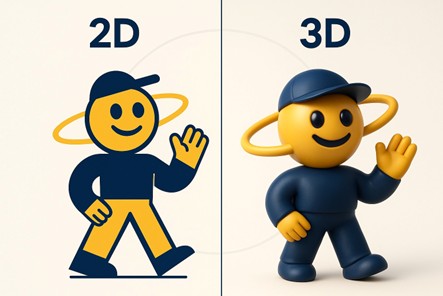
When people hear “2D,” they sometimes imagine Saturday morning cartoons. Fun, yes, but not exactly what you think of when planning a serious campaign. 2D animation for advertising has consistently proven that simplicity sells.
Think of it as the “explainer” language of animation. Clean 2D design in marketing lets brands break down complex concepts into visuals anyone can understand in seconds. That’s why you’ll see 2D dominating explainer videos for mobile apps, SaaS tools, and fintech platforms, industries where clarity directly fuels conversions.
Another advantage is cost and speed. A 30-second 2D ad can often be produced in a fraction of the time (and budget) of its 3D counterpart. For campaigns that live on TikTok or Instagram, where trends shift weekly, fast production is the difference between being part of the conversation and missing it completely.
And then there’s the emotional side. 2D has nostalgia baked into it. Flat illustrations remind audiences of comics, games, or even childhood learning. That familiarity sparks trust and relatability, which is why 2D vs 3D advertising isn’t always about realism. Sometimes, playfulness converts better than polish.
When clarity, relatability, and speed matter most, 2D animation for advertising still packs a serious conversion punch.
Now let’s flip the coin. While 2D wins with simplicity, 3D visual marketing sells with spectacle. Think of it as the blockbuster version of animation, immersive, detailed, and built to make products look premium.
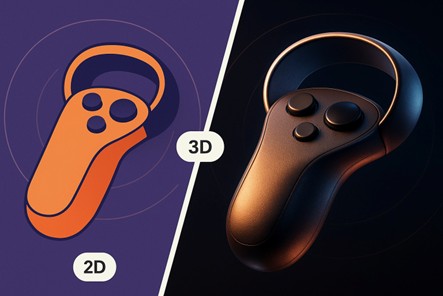
Where 2D design in marketing feels like a helpful guide, 3D feels like a showpiece. A new car launch? A luxury watch? A real estate development? Nothing says “trust us, this is worth your investment” quite like a cinematic 3D illustration service showing every reflection, texture, and detail.
This isn’t just about pretty pictures. Research shows that audiences perceive 3D ads as higher value. In industries like automotive and tech, this perception translates directly into conversions when potential buyers can see a 3D character illustration moving naturally or a product demo that feels tactile, their trust and their willingness to buy increase.
The versatility is unmatched, too. With 3D shape illustrations, brands can create visuals that work across a range of applications, from AR filters to billboard displays. Want a custom 3D figure of your mascot that can live in both a YouTube ad and a trade show booth? 3D makes that possible.
In terms of conversions, 3D builds authority. It positions products as premium, trustworthy, and desirable. If 2D is the friendly teacher, 3D is the glossy magazine cover that makes you stop and stare.
Stories sell better than theory, so let’s look at how both illustration types have performed in real campaigns. Two brands, two approaches, and two very different but equally telling results.
Arapahoe Community College (ACC) wanted to promote its Workforce & Community Programs in a way that felt approachable and engaging. Instead of leaning on dry brochures or static images, they worked with Austin Visuals to create a mascot-led 2D animation for advertising.
The puma mascot guided viewers through the program offerings with a warm, community-centered style. Bold colors, clean vector icons, and a friendly narrative voice made the content feel less like marketing and more like a conversation.
The results were immediate: inquiries about programs increased, the video received strong positive feedback, and the college strengthened its connection with local audiences.
Why did it work? Because 2D design in marketing excels at emotional storytelling and relatability. For an educational brand, where trust and clarity matter more than flashy production, this style delivered conversions by keeping things simple and human.
Komatsu faced a very different challenge. They needed to showcase autonomous machinery and highlight their carbon-neutral initiative, a highly technical message that demanded clarity and authority. Austin Visuals stepped in with a cinematic 3D illustration service built in Unreal Engine.
The ad featured heavy equipment in motion, realistic textures, and environments powered by hydrogen fuel and solar energy. Detailed 3D shape illustrations and lifelike perspectives transformed industrial machines into engaging storytelling assets.
The campaign delivered on all fronts: on time, within budget, and with powerful results. Komatsu gained credibility for its innovation, and the visuals left no doubt about the scale and sophistication of its technology.
This wasn’t about playfulness; it was about precision. For a B2B brand that sells trust in engineering and sustainability, only vector and 3D art could effectively communicate the story.
Comparing both campaigns side by side reveals why 2D vs. 3D advertising isn’t about which style is “better.” It’s about context.
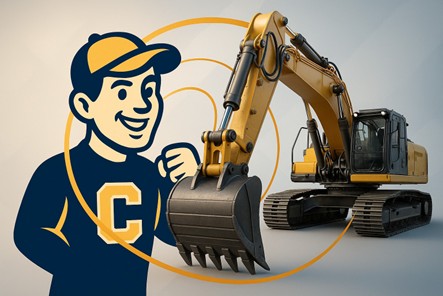
It’s like comparing a sharp infographic with a glossy magazine spread. Both carry weight, but each serves a different audience and purpose.
Saying “3D vs 2D” is like comparing coffee and tea. Both are great, but they’re not the same. To find out which animation style works best for your campaign, focus less on the art and more on practical factors like budget, time, audience, and platform. Let’s break it down.
Cost is usually the first big question.
If the campaign is short-lived, 2D often delivers better value. For long-term, multi-use assets, 3D can pay for itself many times over.
Deadlines decide everything.
Think of 2D as the sprinter, fast, effective, and ready to react to trends. 3D is the marathoner, slower to build but built to last.
Not every platform plays fair with animation styles.
Mini-Comparison: If you’re running a 10-second TikTok ad for a food delivery app, 2D converts better. If you’re running a 45-second YouTube ad for a luxury car, 3D wins every time.
Conversion isn’t just about what looks good; it’s about what feels right.
Ask yourself, does my audience want to feel “understood” or “impressed”? The answer points to whether 2D vs 3D advertising will convert better.
Modern marketing isn’t about one ad; it’s about consistent storytelling across multiple touchpoints.
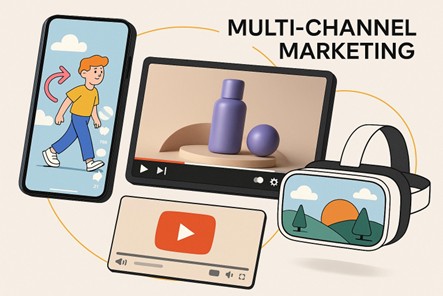
Keeping conversion as a goal, the choice between 3D vs 2D depends on what you’re selling and how you want people to feel.
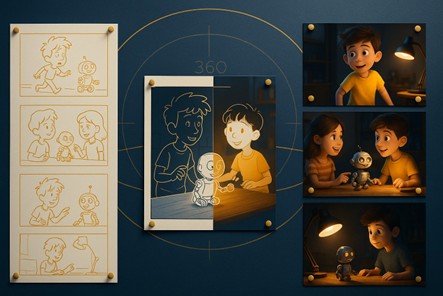
But the smartest move often isn’t picking one. It’s mixing both. Hybrid approaches, think motion graphics with 3D character illustration or 2D explainers punctuated with 3D shapes illustration, offer the best of both worlds. These combinations deliver relatability upfront, then seal the deal with polish and authority.
In comparison of 3D vs 2D, there isn’t a universal winner. Each style converts best when matched to the right campaign goal. 2D animation works wonders when speed, clarity, and relatability are key, making it perfect for social ads, explainers, and budget-friendly campaigns. 3D visual marketing excels when detail, trust, and premium appeal are paramount, as in tech, automotive, or luxury branding.
The smartest campaigns don’t treat this as an either-or decision. They use both 2D for approachable storytelling and 3D for immersive authority.
The bottom line? Brands that know when to use 2D and when to invest in 3D are the ones that consistently drive clicks, sales, and long-term loyalty. Animation isn’t just decoration for them; it’s a conversion tool hiding in plain sight.
Looking for more information? Call us at +1 (855) 521-5040 for quick support!


Have a project in mind? Reach out to us, and we’ll help turn your ideas into stunning illustrations.
Tell us what you need, and we’ll create a custom illustration just for you. Reach out today and let's get started!
 +1 (855) 521-5040

Copyright © 2026 360 Illustration House | All rights reserved. Terms And Conditions | Privacy Policy | Refund Policy


 LIVE CHAT
 +1 (855) 521-5040